What the Hail Is Happening With Brisbane’s Weather?

Why This Hail Season in Southeast Queensland Has Been So Extreme
November 28, 2025
As Brisbane and Southeast Queensland are in the midst of yet another storm clean-up after Monday's destructive hybrid-supercell complex swept through , one thing is clear to storm-weary locals: this season has been exceptional.
In six weeks, we’ve seen ten days with giant hail across the Southeast Coast - nearly twice per week.
Maps indicating the size of hail for the major hailstorms across Southeast Queensland so far from the 2025 season, with local reports of giant hail occurring in the recent November 27 activity). Source: Hailtracker.io
So what’s driving the intensity this year?
Brisbane & Southeast Queensland: A Hail and Thunderstorm Hotspot
Before diving into the unusual patterns of 2025, it’s worth remembering that Southeast Queensland has always been a high-risk zone. This region sits in Australia’s “severe thunderstorm alley,” where the key ingredients for dangerous storms regularly line up:
High instability
Strong upper-level winds
A trigger
It’s the perfect storm-making and hail recipe.
Instability: Heat + Humidity + Cold Air Aloft
Warm-season days in Southeast Queensland are famously hot and humid which is a powerhouse combination for building instability. Instability is essentially the ability for air to rise upwards, and the hotter and more humid it is, the more rapidly the air can rise upwards. That's essential to supporting giant hailstones where updrafts often need to exceed 150km/h to suspend giant hail in the air.
Add bursts of cold air in the upper atmosphere (which periodically arrive thanks to cold fronts and winter systems still traversing through southern Australia) and you get the ideal conditions for not just hail, but severe thunderstorms in general.

Upper-Level Winds (and the Seabreeze Advantage)
Strong winds high above help thunderstorms organise themselves, keeping their updrafts and downdrafts separated so the storm can sustain itself. Southeast Queensland also has a unique helper: the seabreeze front.
This gusty, humid NE surge often collides with inland storms, injecting extra moisture, while the stronger surface winds help balance out the storm's gusty, cold outflow that help storms stay balanced and long-lived which is essential for long-lived severe storms.

Triggers: Troughs, Fronts, and Mountains
Troughs and cold fronts are classic triggers to help force warm and humid air up into the atmosphere to produce thunderstorms, but in Southeast Queensland, the surrounding mountain ranges do a lot of extra work. They can initiate storms even on marginal days.
The Darling Downs also plays a role as its elevated, hot environment can spark storms that can intensify as they drift into the humid, more capped coastal air.

The "Goldilocks Zone"
All of these ingredients can occur anywhere across Australia, but they occur more frequently across broad areas of southeastern Queensland and northeastern NSW. Across tropical Australia there's plenty of instability but often not much in the way of cold air or strong winds in the upper atmosphere. Across southern Australia there's plenty of cold air and strong winds in the upper atmosphere, but the heat, humidity and instability is often lacking.
But for Brisbane and the broader areas of southeastern Queensland and northeastern NSW these ingredients occur more often on average than anywhere else.
Hail frequency maps for Brisbane, Sydney and Melbourne. Brisbane is the most prone capital city in Australia to large hail. Source: Hailtracker.io
Why the 2025 Hail Season Is More Intense Than Normal
Despite being a hotspot - there's no denying that the 2025 season has been unusually active and it’s the result of multiple climate drivers stacking together.
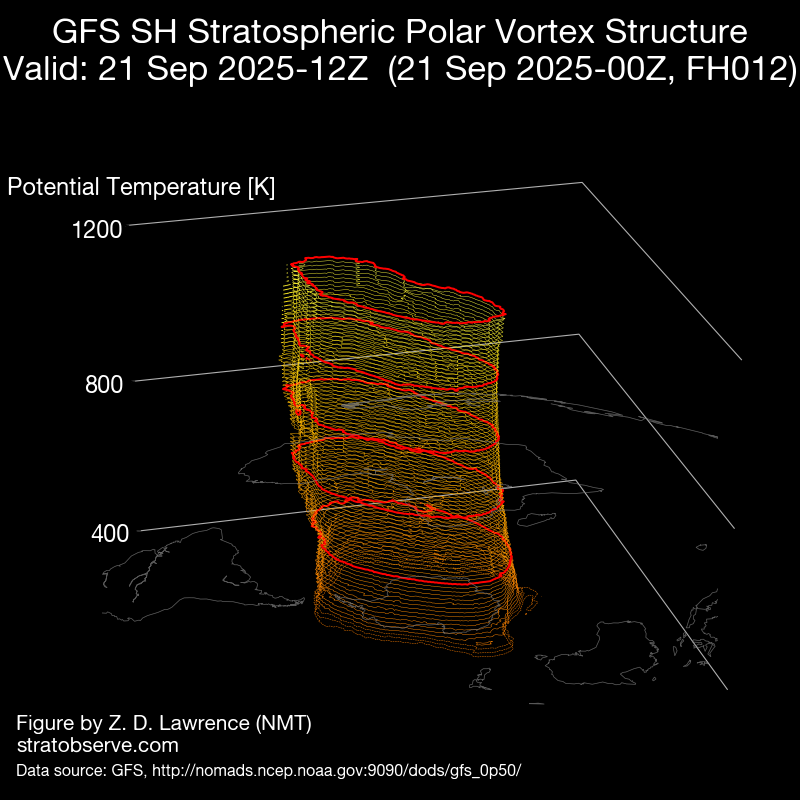
1. A Sudden Stratospheric Warming Event (SSW) - Increasing Westerly Winds
During August and September, a SSW event occurred. These events temporarily disrupt climate patterns and induce a more negative SAM (Southern Annular Mode) phase. Negative SAM phases increase cold front activity across the southern half of Australia - this can increase cold air and winds in the upper atmosphere which are key ingredients for severe thunderstorms.

Trough systems are the bones of the thunderstorm season - these often get pushed around by prevailing broader climate influences, with cold fronts pushing the troughs eastwards while the easterly trade winds across the Pacific Ocean help push these troughs back inland. It's an inverted tug-of-war, but where this trough lies often determines where the storms will occur.
In this case, the westerly winds from the cold fronts have been strong enough to keep the trough semi-parked across southeast Queensland (but not so strong that it sits offshore and remained too dry). This wasn't the case during the first half of spring when the westerly winds dominated and kept everything too dry for showers and storms and for many it felt quite similar to the start of 2019, however the climate drivers for 2025 are quite different.

2. A Strongly Negative Indian Ocean Dipole (IOD)
Here’s where 2025 differs from 2019. This year’s negative IOD has been dragging moisture from the Indian Ocean into central and eastern Australia. That's providing important moisture for thunderstorm initiation.

3. Weak La Nina / La Nina 'Modoki' & Warm Ocean Temperatures
In order for the trough to lie over the same region, broader climate winds must remain balanced. With a weak La Nina (or possible La Nina modoki) sitting in the Pacific Ocean, this has meant the easterly trade winds haven't been too strong. But also, aren't completely absent and has helped to anchor the surface trough over the region during the past 6 weeks.

Adding to this - Australia is experiencing a 'marine heatwave' with record high ocean temperatures. They're helping to fuel higher than normal humidity along the east coast which is helping to fuel the strong instability required for severe thunderstorms.
4. Upper Troughs Boosting Wind Shear
Upper troughs (regions of cooler air aloft) have frequently swept across the region thanks to the active period of cold fronts across southeastern Australia. Cooler air upstairs strengthens pressure gradients, increasing wind shear - the final ingredient for well-organised, hail-producing storms.

The Result: Six Extremely Active Weeks
With all three ingredients lining up so consistently, Southeast Queensland has experienced one of its busiest hail and severe thunderstorm periods in years with frequent giant hail and multiple high-end supercell events.
What's interesting is that the past 6 weeks have very much mimicked the patterns we identified in our climate driver hail frequency research which indicates that negative SAM phases in the warm season are very conducive to increasing hail frequency around Brisbane and Southeast Queensland.
When Will It Settle Down?
Eventually, this pattern will break down. Easterly trade winds over the Pacific are likely to re-establish and shift the storm setup back toward something more typical.
But this may not fully occur until mid-December, meaning the next couple of weeks could still deliver additional severe storm outbreaks before easing into a more normal late-December pattern.
Are you Storm Season Ready?
This means it's not too late to be prepared for severe weather. At Weatherwatch, our HailTracker platform, real-time hail alerts and weather forecasts have been helping insurers, businesses and solar farms stay ahead of this unusually active season.
We provide immediate visibility of hail size, storm tracks and assets at risk and the only organisation in Australia that provides a real-time hail model that updates every 5 minutes providing a forecast of hailstorms for the next 30 minutes.

If you want to have a chat and explore how we may be able to assist, please reach out to our team.
Weatherwatch - your trusted partner in weather intelligence.